From AI adoption to workforce readiness: what CHROs need to get right
Key insights
- AI adoption is only the starting point. True readiness requires organisations to rethink how work, skills and operating models are designed.
- Human capabilities will remain a competitive advantage. Judgement, curiosity, adaptability, creativity and leadership become increasingly important alongside AI.
- Workforce investment needs to be more targeted. CHROs must decide where to build, buy, redeploy or redesign skills to deliver the greatest business impact.
- EVP needs to evolve with transformation. What organisations promise their people must reflect the reality of how work and employee expectations are changing.
- Leaders need to be comfortable without all the answers. Curiosity, collaboration and the ability to adapt will be critical as organisations navigate AI-driven change.
The CHRO remit has arguably never been broader: AI, workforce transformation, skills, productivity, leadership, culture, cost and capability.
Individually, none of these are new conversations. What is different is the speed at which they are converging, and the increasing expectation on HR leaders not simply to respond to change, but to help their organisations anticipate it.
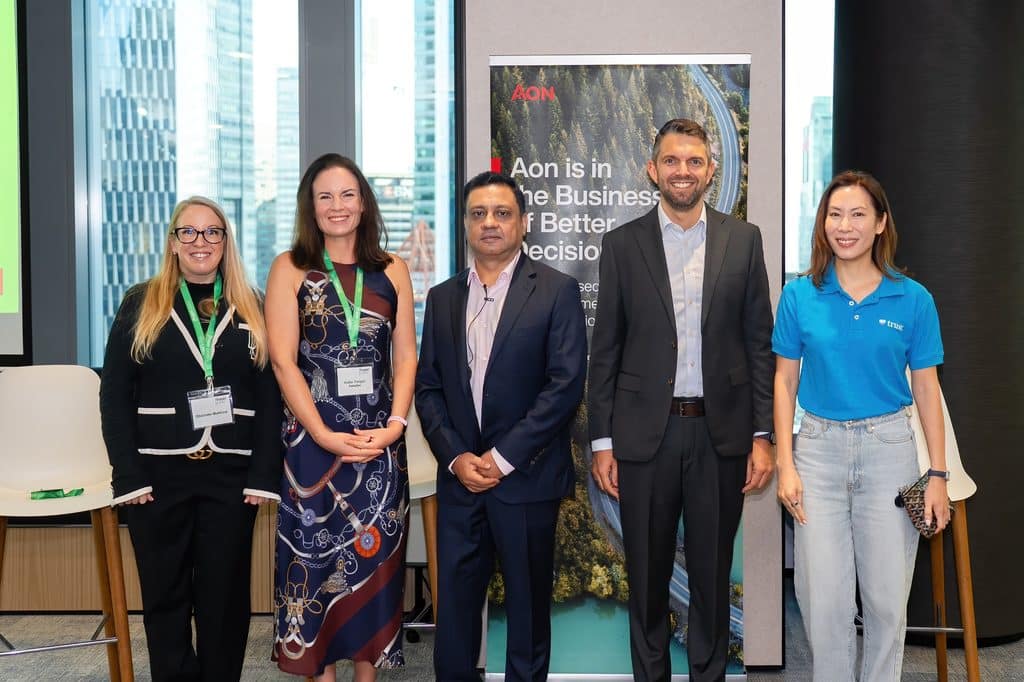
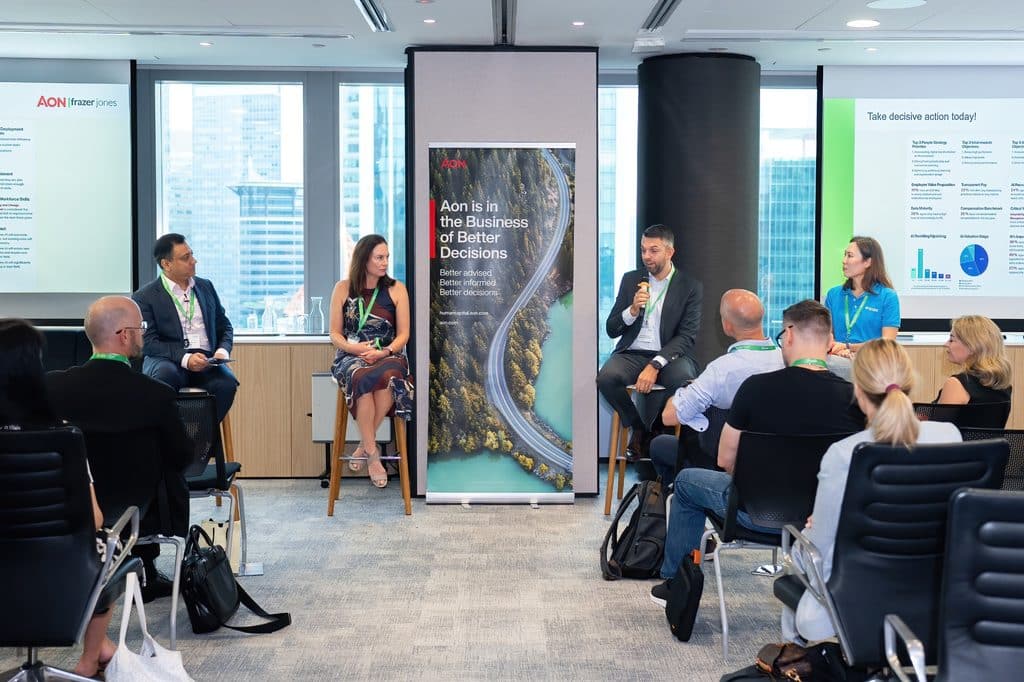
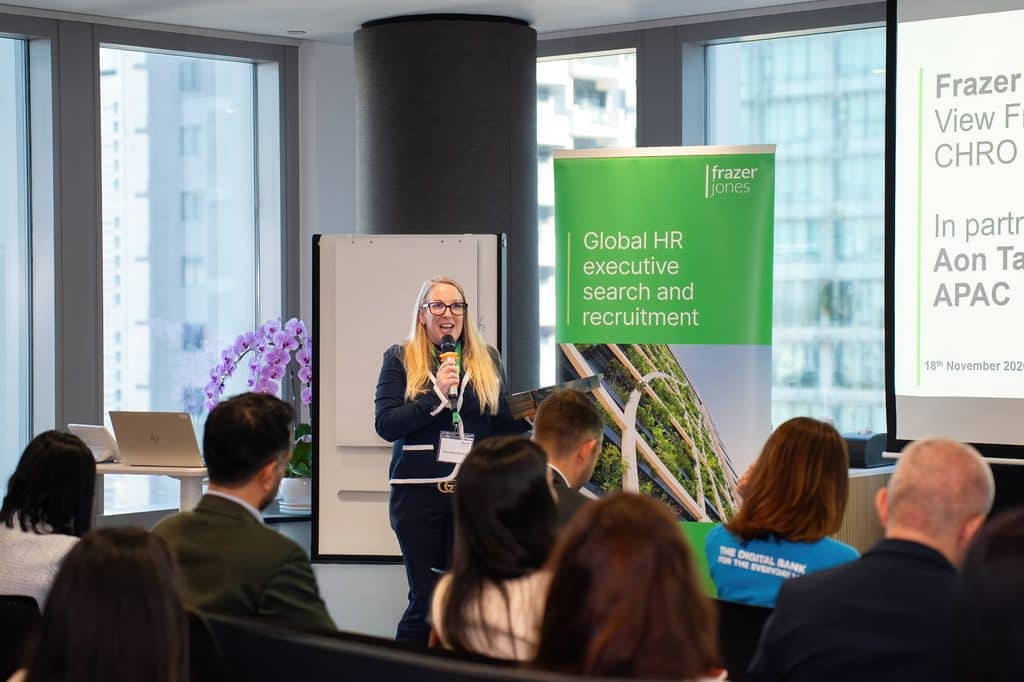
That was the backdrop to our latest Frazer Jones “View from the Top” CHRO Insights session in Singapore, co-hosted with Aon Talent Solutions. On the panel, we were joined by Daniel Blackburn, MD, Global Head of Enterprise Workforce Transformation at Standard Chartered; Kellie Twigge, Group Head of HR at Petredec; Puneet Swani, Partner and Head of Talent Solutions, Asia Pacific at Aon; Jocelyne Loh, Chief People Officer at Trust Bank; and Charlotte Matthew, MD, Head of Southeast Asia and Global Financial Services at Frazer Jones.
We brought together a select group of Group CHROs and senior HR leaders for a candid discussion around three themes emerging from Aon’s latest human capital research:
- AI implementation has gone mainstream, but AI readiness has not.
- Investing in people is the ultimate advantage in the age of AI.
- Turning investment into impact requires organisations to rethink the employee proposition.
What followed was less a conversation about technology and more a conversation about work: how it is designed, how organisations decide which capabilities matter, how leaders take their people with them, and what HR itself may need to stop doing.
AI adoption is not the same as AI readiness
Perhaps one of the most important distinctions for CHROs is between implementing AI and actually being ready for it.
Organisations can deploy technology relatively quickly. Redesigning work, skills, behaviours and operating models around that technology is considerably harder. This creates a very different set of questions for HR leaders.
Where should AI augment people? Where can it genuinely replace work? Which activities should remain deliberately human? And where are organisations simply layering AI onto processes and operating models that were never designed for it?
For CHROs, there is a danger in treating AI as another transformation programme. The bigger opportunity is to use it as a catalyst to step back and ask a more fundamental question:
If we were designing the organisation today, with the technology and capabilities now available to us, would we design work in the same way?
Increasingly, the answer will be no.
That means moving the conversation beyond roles and organisational charts towards workflows, tasks and skills. It also requires HR to bring the right stakeholders around the table earlier, experiment before every answer is known, and become much clearer about the business problem it is trying to solve.
In the age of AI, people may become more important, not less
One of the more interesting tensions in the AI conversation is that as technology becomes more sophisticated, distinctly human capabilities can become more valuable: judgement, curiosity, adaptability, leadership, creativity and collaboration, alongside the ability to navigate ambiguity and make decisions when there is no obvious answer.
The strategic workforce question therefore isn’t simply: “How do we reskill people for AI?”
It is: “Which capabilities will differentiate our organisation three to five years from now, and where should we build, buy, redeploy or redesign?”
That distinction matters. At enterprise scale, organisations cannot invest equally in everything. CHROs increasingly need to make explicit choices around where human capital investment will create the greatest commercial advantage. Importantly, those choices need to connect more directly to business outcomes.
The future HR function will be measured less by the volume of activity it undertakes and increasingly by the impact it creates: productivity unlocked, capability built, critical talent retained, leadership strengthened and organisational performance improved.
The EVP needs to become a reality, not a statement
The third conversation was around EVP, but deliberately not from the traditional perspective of attraction or employer branding.
At CHRO level, the more interesting question is what an organisation genuinely offers its people in exchange for performance, adaptability and commitment. That becomes particularly important during transformation.
Organisations are asking employees to learn new skills, embrace AI, work differently, increase productivity and, often, operate through considerable ambiguity. The employee proposition therefore has to evolve alongside the business strategy.
The organisations that do this well will resist the temptation to build an aspirational EVP disconnected from employees’ lived experience. Instead, the question becomes:
What do people genuinely experience here today, what do we want them to experience tomorrow, and what has to change to close that gap?
That may ultimately prove far more powerful than any employer-branding campaign.
Leading when no one has all the answers
One thought stayed with us throughout the morning: none of us has all the answers.
Perhaps that is something leaders should become more comfortable acknowledging. In periods of fundamental change, experience remains enormously valuable. But so does the willingness to become a beginner again, and that feels particularly relevant with AI.
The strongest leaders we see are not pretending to know exactly what the organisation of 2030 will look like. They are learning quickly, asking better questions, bringing different perspectives to the table and remaining prepared to change course as the evidence changes.
Three leadership principles stood out from the discussion:
- Turn concern into energy. Transformation inevitably creates discomfort. The opportunity for leaders is to channel that uncertainty into purpose and momentum while keeping people at the centre.
- Keep challenging your assumptions and investing in your own development. However experienced we are, we need to remain willing to question what we know and become a beginner again.
- Be clear about the problem you are trying to solve. Bring the right people together early and cross-functionally, keep skills front of mind and measure the impact you create.
Creating the conversations that matter
At Frazer Jones, executive search is at the heart of our business, but our relationships with the HR leadership community extend far beyond individual appointments.
Over the past 30 years, we have had the privilege of supporting HR leaders through multiple chapters of their careers, across organisations, industries and geographies.
Our “View from the Top” CHRO Insights series has grown from those relationships.
The ambition is deliberately simple: to create trusted forums where CHROs and senior HR leaders can step outside of their organisations for a few hours, exchange perspectives with peers and have candid conversations about the issues that will shape the profession and their businesses next.
A huge thank you to Aon Talent Solutions for partnering with us and hosting this latest Singapore session, and to Puneet Swani for bringing Aon’s research to life.
Our sincere thanks also to Dan, Jocelyne and Kellie for sharing their perspectives so openly, and to the many CHROs and senior HR leaders who joined us and contributed to the conversation.
Our next Frazer Jones CHRO Insights event will take place at Bloomberg’s Singapore offices in the first half of 2027, alongside a series of smaller, closed CHRO roundtables focused on specific sectors including banking, fintech and data centres.
Get in touch
If you are a Group CHRO, CPO or senior HR leader based in Singapore and would be interested in joining a future Frazer Jones CHRO Insights session, we would be delighted to hear from you.
At a time when none of us has all the answers, creating the right room for the right conversations has perhaps never mattered more.