Why interim HR hiring is gaining momentum in 2026
Key insights
- Interim HR hiring is becoming a strategic workforce solution. Organisations are increasingly using interim HR professionals to drive transformation, manage change and access specialist expertise without increasing permanent headcount.
- HR transformation projects are fuelling interim demand. Restructures, organisational design, HR technology implementation and workforce change programmes are creating strong demand for experienced interim HR talent.
- Employee relations expertise is a top hiring priority. As employment legislation evolves, businesses are seeking interim employee relations specialists to support compliance, workforce change and complex people challenges.
- Talent acquisition and contract hiring are showing signs of recovery. Growing demand for interim talent acquisition professionals suggests increasing business confidence and renewed investment in recruitment activity.
The interim HR market has undergone a significant transformation in recent years. Once primarily associated with maternity cover or short-term backfill requirements, interim and contract professionals are now playing a far more strategic role within organisations.
As businesses continue to navigate economic uncertainty, evolving employment legislation and organisational change, many are turning to interim talent to provide specialist expertise, flexibility and immediate impact.
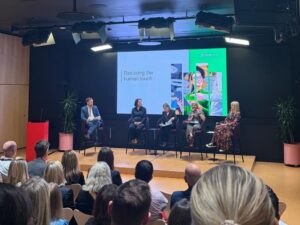
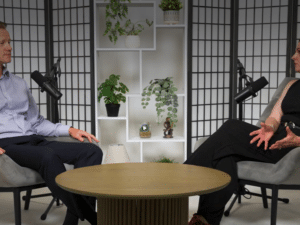
In a recent discussion, Marcus Cornish and Amber Lucas shared their perspectives on the state of the interim market and the trends shaping demand across financial services, commerce and industry, and the wider HR landscape.
Their observations point to a clear trend: organisations are increasingly using interim HR professionals not simply to maintain business continuity, but to drive HR transformation, support business change and help organisations navigate increasingly complex workforce challenges.
Interim hiring is becoming a strategic business decision
One of the strongest themes emerging across the market is the growing appetite for flexible talent solutions.
For many organisations, long-term workforce planning has become increasingly difficult. Economic uncertainty, changing legislation and shifting business priorities make forecasting future hiring needs more challenging than in previous years.
As a result, organisations are increasingly turning to interim hiring, fixed-term contracts and fractional HR resources to provide specialist skills without committing to additional permanent headcount or large volumes of permanent hires.
Within financial services, Marcus highlighted increasing demand for genuine day-rate contractors as businesses seek greater agility. Contract professionals can often be deployed quickly to respond to changing priorities, allowing organisations to access expertise precisely when needed.
The trend is not limited to one sector. Across commerce and industry, Amber has seen a significant increase in six-month fixed-term contracts, providing a balance between flexibility for employers and security for candidates.
In a market where many organisations are operating with leaner structures and tighter budgets, interim professionals are becoming a highly effective solution for addressing immediate challenges without introducing unnecessary long-term risk.
Transformation and restructures are driving demand
A major factor behind the growth in interim hiring is the volume of transformation activity taking place across organisations.
Businesses continue to review structures, streamline processes, introduce automation and pursue efficiencies wherever possible. These initiatives often require specialist expertise that may not exist within existing HR functions or existing HR teams.
Many of the interim opportunities currently coming to market are linked to:
- Restructures
- HR transformation programmes
- Organisational design projects
- Process improvement initiatives
- Technology upgrades
- Workforce restructuring
- Cost control initiatives
- Workforce change programmes
This represents a significant shift from the traditional interim market.
Historically, many assignments focused on maintaining business continuity. Today, organisations increasingly want contractors who can deliver measurable outcomes, provide hands-on delivery and leave the business in a stronger position than when they arrived.
As Amber noted, employers want interim professionals who can push initiatives forward, identify improvements and deliver lasting value.
The growing demand for transformation expertise is also creating opportunities for professionals specialising in HRIS and HR technology, change management and organisational design.
Lorem ipsum dolor sit amet, consectetur adipiscing elit, sed do eiusmod tempor incididunt ut labore et dolore magna aliqua. Ut enim ad minim veniam, quis nostrud exercitation ullamco laboris nisi ut aliquip ex ea commodo consequat. Duis aute irure dolor in reprehenderit in voluptate velit esse cillum dolore eu fugiat nulla pariatur. Excepteur sint occaecat cupidatat non proident, sunt in culpa qui officia deserunt mollit anim id est laborum.
Employee relations specialists are in high demand
One area experiencing particularly strong demand is employee relations.
Many organisations are preparing for upcoming changes associated with the Employment Rights Bill and broader developments in employment law. At the same time, many businesses are managing restructures and workforce change programmes.
As a result, employee relations specialists have become some of the most sought-after contractors in the market.
This includes expertise across:
- Redundancy programmes
- Consultation processes
- Employment law compliance
- Performance management
- Policy reviews
- Workforce change
- Organisational redesign
Businesses increasingly recognise that bringing in specialist employee relations expertise during periods of change can reduce risk, improve outcomes and support managers through complex situations.
Many organisations are also investing in manager capability, performance processes and probation management to prepare for future legislative requirements. Resources from both the CIPD and ACA continue to provide valuable guidance for employers navigating these changes.
This is creating demand for experienced HR Business Partners, senior employee relations specialists, Heads of HR and HR leaders who can support businesses through significant periods of change.
Interim careers are becoming more attractive
The evolution of the interim market is creating exciting opportunities for candidates.
Traditionally, many HR professionals viewed interim work as an alternative to permanent employment. Increasingly, however, candidates are actively choosing interim careers because of the variety of projects, sectors and challenges they can experience.
Many contractors are moving across multiple assignments covering employee relations, transformation, organisational design, onboarding and workforce change.
This allows professionals to develop highly commercial skill sets that can be difficult to acquire through traditional career routes.
It is also creating opportunities for HR professionals from permanent backgrounds to explore contracting for the first time, bringing valuable expertise into the interim market.
Whether someone has previously worked as an HR Business Partner, Head of HR, HR Director, Interim HR Manager or specialist project consultant, organisations are increasingly valuing diverse experience gained across multiple environments.
Another factor contributing to the growth of the interim market is improved candidate availability. Following slower periods of hiring activity during recent years, employers now have access to a wider pool of high-quality contractors capable of delivering immediate value.
Talent acquisition is showing signs of recovery
One of the most encouraging developments is the resurgence of talent acquisition hiring.
Historically, recruitment functions often provide one of the earliest indicators of market confidence. When hiring activity begins to increase, demand for talent acquisition professionals often follows.
There has been increasing levels of contract hiring across talent acquisition functions, particularly where organisations require rapid access to skills without committing to permanent hires.
Much of this HR hiring remains interim or fixed-term in nature, but the increase is nevertheless a positive signal.
Demand is emerging across both strategic and operational talent acquisition roles, creating opportunities for recruitment professionals who have faced a difficult market over recent years.
Professionals interested in opportunities within this area can explore the latest opportunities in acquisition recruitment.
For organisations, contract hiring offers a commercially sensible way to access expertise while maintaining flexibility. For candidates, it creates opportunities to re-enter growing recruitment functions and contribute to business growth initiatives.
As confidence continues to return, talent acquisition activity often acts as a leading indicator of wider improvements across the HR recruitment market.
Why contract extensions are increasing
Another notable trend is the increasing number of contract extensions.
Many interim assignments are extending beyond their original duration, whilst similar patterns can be seen across the commerce and industry market.
Several factors are contributing to this.
Firstly, organisations frequently see positive results from contractors who have delivered meaningful change, making them reluctant to lose that expertise.
Secondly, in a market where long-term forecasting remains difficult, extending an interim professional often represents a safer option than committing to additional permanent hires.
Thirdly, many organisations are using interim contracts as a route into permanent recruitment. Contractors are effectively demonstrating their capabilities before a permanent offer is considered.
This enables organisations to assess capability, delivery style and cultural fit before making a longer-term commitment.
For candidates, this creates opportunities to continue building interim careers or transition into permanent roles where appropriate.
What does the future hold for interim HR?
Continued workforce transformation, employment law reform, organisational change and process improvement initiatives are all likely to support further growth in interim hiring.
At the same time, organisations are becoming increasingly comfortable with flexible hiring models, recognising the benefits they provide in uncertain market conditions.
For employers, interim hiring provides flexibility, specialist expertise, improved cost control and access to skills exactly when they are required.
For candidates, interim careers offer variety, development opportunities and exposure to complex business challenges.
Perhaps most importantly, interim professionals are no longer viewed simply as temporary solutions. They are increasingly seen as strategic partners who can support HR functions, drive change and deliver meaningful business outcomes.
As organisations continue to navigate uncertainty, interim talent is likely to remain an essential component of workforce strategies across a wide range of sectors.
While some businesses may also explore alternative hiring routes through firms such as Robert Half and other providers, the demand for specialist HR expertise, particularly across employee relations, transformation and organisational change, continues to create significant opportunities for both employers and candidates.
How Frazer Jones can help
Frazer Jones supports organisations and HR professionals across interim, contract and permanent recruitment. Whether you are looking to hire specialist HR talent, strengthen your employee relations capability, expand your HR teams or build project teams to support transformation initiatives, our consultants can help.
Explore our latest HR jobs, learn more about our expertise across commerce and industry recruitment and browse our latest HR insights and market intelligence to stay informed about developments across the HR market.
For organisations seeking senior HR leadership, specialist interim talent or strategic HR expertise, Frazer Jones also provides support across executive search and senior-level HR appointments.