Could mentoring be the cost-effective talent accelerator and attractor you and your organization are missing?

What happens when you put together an expert on high performance and an expert on professional relationships? Well, the secret sauce people and organizations aren’t leveraging enough: mentoring.
Dr Ruth Gotian is globally recognized expert in leadership development, recognized by Nature, Wall Street Journal and Columbia University and ranked as the number one emerging management thinker by Thinkers50.
Andy Lopata is a specialist in professional relationships and mentoring, called “one of Europe’s leading business networking strategists” by the Financial Times and ”a true master of networking” by Forbes.com. The two make a perfect combination to educate us on the power of mentoring.
Ruth and Andy met when Ruth spotted a post by Dorie Clark about Andy’s book, Connected Leadership. She reached out to Andy who joined Ruth’s high achievers network podcast. During the pandemic, Andy published Just Ask: Why Seeking Support Is Your Greatest Strength and Ruth was about to publish The Success Factor – Developing The Mindset And Skillset for Peak Business Performance. The subject of mentoring, featured in both of their discussions, evolved over three years into their co-authored release this month – Mentoring: A Complete Guide to Effective Mentoring!
Here, Brad Law chats to them about why mentoring is a key part of any organization’s people strategy.
What are the benefits of mentoring for organizations?
“Put simply – people are attracted to organizations that invest in them!
Mentoring’s real value to an organization is its power to drive the retention and recruitment of top talent. Talent attraction and retention remains one of the top five challenges facing businesses and HR leaders. People are attracted to organizations that invest in them; and people want to work where they see a clear path forward, and part of a clear path is being and feeling supported on that journey.
The value of mentoring is also heavily research-backed, and these outcomes haven’t changed over time or across industries: those who are mentored outearn and outperform those who aren’t. We know that high achievers are 400% more productive than the average employee. If you start investing in those people through mentorship programs, they will start to be even more productive. They will be the next generation of leaders within your organization. High performers also tend to have a network of high performers that they’re likely to bring into the organization. In short, mentoring will save you money and allow you to invest in your top talent, which will benefit talent attraction efforts immensely.”
How do you build a case for mentoring?
“The leadership team must realize and be bought into the value of mentoring. If you are looking to convince your CEO or business leaders of mentoring’s value, start by exploring with them what support they have had on their own journey. No doubt, they will have had someone that helped them on their journey to get where they are today. Get them to imagine the impact of that support, echoed throughout the organization as if they had role models and advocates at all levels of leadership.
We know that anyone who has achieved anything hasn’t got there alone. Every astronaut, Nobel prize winner, Olympian, every NBA champion, every CEO, have got there because they have surrounded themselves with a team of mentors.”
What are the challenges facing mentoring programs?
“Bandwidth is always the biggest challenge. Mentoring can be perceived as “extracurricular”, so you must sell the value. You cannot have “internal moaning” because someone is off desk for mentoring; participants will feel pulled in two directions. It needs line manager and peer support.
Secondly, recruiting the right mentors is critical. Our book explores this in more detail as well as an unspoken element that needs consideration – “what is the exit ramp when mentoring isn’t working, when the relationship fizzles or the mentor becomes a tor-mentor?”
A question we often get from our clients at Frazer Jones is how you pair mentors and mentees. Frequently, organizations will match based on demographics when a skills-based approach is far more impactful. Pairing mentors with a strength in a particular area with a mentee looking to develop this strength is key. Chemistry is still important, while they do not need to be best friends, they do need to connect. The most critical piece in supporting this connection is the values alignment, despite different views or demographics, the critical question to ask is:
Do the mentor and mentee align on values?
“Interestingly, over 60% of mentoring relationships happen organically. Often the best strategy for an organization isn’t a formal mentoring program, but rather creating opportunities for people to meet each other and training on how to develop these professional relationships. Some organizations have had speed-mentoring (speed-dating style) sessions, where mentees and mentors meet, and they have a scorecard and can match with each other rather than having the organization do the selection. There is also an evolving new space where technology is having an impact, through mentor matching software such as Mentor Match, used by a number of professional services firms.
One mentor often isn’t enough, mentors can burn out and there is value in diversity of perspective as well. Which brings us to mentoring and diversity, equity and inclusion (DEI).”
What do we need to consider from a DEI perspective?
“It can be hard to find a mentor ‘like’ you. For underrepresented groups, there regrettably isn’t always a leader that “looks” like them that they can tap into. But do they need that? We suggest not just having one mentor but building your mentoring team. Mentors from the same demographic provide support and understanding, as they recognize the cultural context, while other mentors can come from a completely different perspective and challenge you by offering cognitive diversity. You want to position yourself so you have mentors who can both help you in the context and challenge the context as well.
This step is sometimes where formal mentorship programs can fall short. Leveraging diversity of thought through capturing mentors from outside the organization and outside the industry can be lost. One area where formal mentoring programs can positively impact DEI is that they often provide access to those who may not secure a mentor otherwise.
It’s important to consider accessibility to mentoring. Underrepresented groups may not feel as confident in applying, so it’s paramount to advocate and encourage applications. Driving mentoring outside the organization is also a valuable strategy. Here, give your employees the training on how to approach mentors and build these relationships. Better yet, foster opportunities for people to network.”
How do you measure return on investment?
“What is the return on a mentoring program? Is it better to invest in something else? How do we know it’s working?
Most organizations will establish KPIs for mentoring programs. I advise splitting these into the tangible and intangible. A tangible KPI might be, for example, mentoring someone to reach the board. Have they reached the board? You’re mentoring someone to produce more business. Are they producing more business? The intangible is where you’re mentoring someone to raise their profile. How do you measure an increased profile? How do you measure confidence? You can’t, but you can set milestones along the way. You could say we are going to get to a point where you are going to deliver this pitch that you wouldn’t normally deliver. You are going to do it in three months’ time. You can measure these milestones for some of the more intangible objectives. You can find a scorecard for measuring the impact of a mentoring relationship here.”
Can you ask someone to be your mentor?
“I think that successful people are busy and may feel uncomfortable saying no. The best approach is often asking a potential mentor’s opinion or perspective on a challenge where they are well positioned to do so – but be very targeted and specific with your question. This can start a conversation that naturally evolves into a longer-term professional relationship where that person may become more of an official mentor. If you find success here as a mentee, it’s important to provide updates and feedback to make your ‘mentor’ feel good about their involvement to foster the relationship.”
Our parting advice to the HR community is that, when you’re in HR, your focus is almost always on other people. Before you start thinking about how you plan better employee mentoring within your organization as a talent accelerator and attractor, stop! Put your oxygen mask on first and make sure you have the mentoring team you need to support your success!
Andy and Ruth’s book provides a wealth of more information to drive mentoring within your organization and for your own personal journey to success. It’s available now to purchase here.
About The Authors
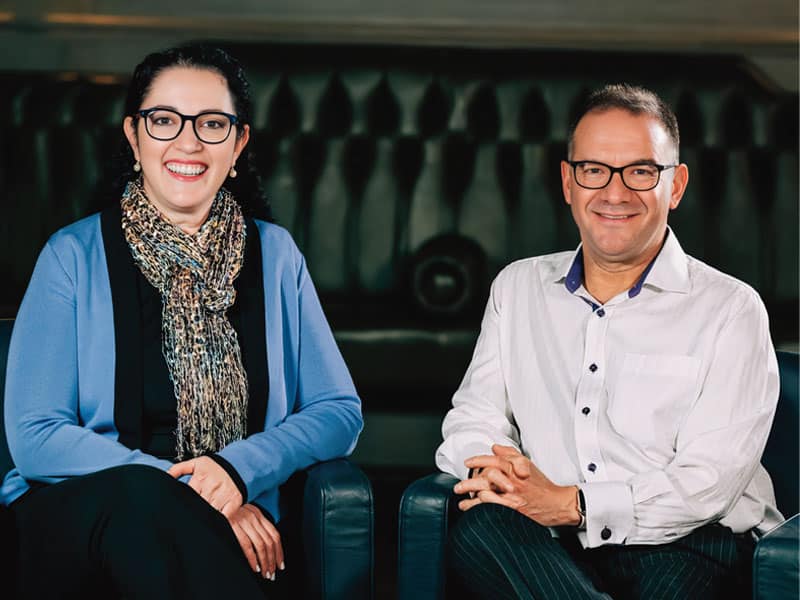
Dr. Ruth Gotian, Chief Learning Officer, Associate Professor of Education in Anesthesiology and former Assistant Dean for Mentoring at Weill Cornell Medicine, is a globally recognized expert in mentorship and leadership development. Hailed by Nature, Wall Street Journal, and Columbia University as an expert in mentorship and leadership development, she was named a top 20 mentor worldwide. Thinkers50 ranked her as the #1 emerging management thinker in the world in 2021, and LinkedIn recognized her as a top voice in mentoring in 2023.
A semi-finalist for Forbes 50 Over 50, Dr. Gotian is a prolific contributor to Harvard Business Review, Forbes, and Psychology Today, where she shares insights on ‘optimizing success.’ With a focus on the mindset and skill set of peak performers, including Nobel Prize winners, astronauts, Olympic and NBA champions, she’s also an award-winning author of The Success Factor and The Financial Times Guide to Mentoring.
Andy Lopata is a specialist in professional relationships, mentoring, and networking and was called “one of Europe’s leading business networking strategists” by the Financial Times and “a true master of networking” by the Independent and Forbes.com. Andy is a firm believer that professional relationships underpin our success in our business, our roles and our careers.
The right relationships with the right people can lead to new business opportunities, investment, collaborative working, innovation and career progress. We just need to be comfortable approaching those relationships strategically, without making people feel ‘networked’ by us. This is Andy’s sixth book. In addition, he is the host of the Connected Leadership podcast and has a regular blog in Psychology Today.