From CHRO to the boardroom: why HR leaders make exceptional Non-Executive Directors
Key insights
- CHROs bring a vital people lens, linking talent and culture to business performance
- Human capital is now a board-level risk, needing data-driven oversight
- CHRO skills already align well with governance and board work
- Boards are shifting toward specialist expertise, increasing demand for HR leaders
- CHROs must show commercial and financial impact to overcome outdated perceptions
About Carmen Wee
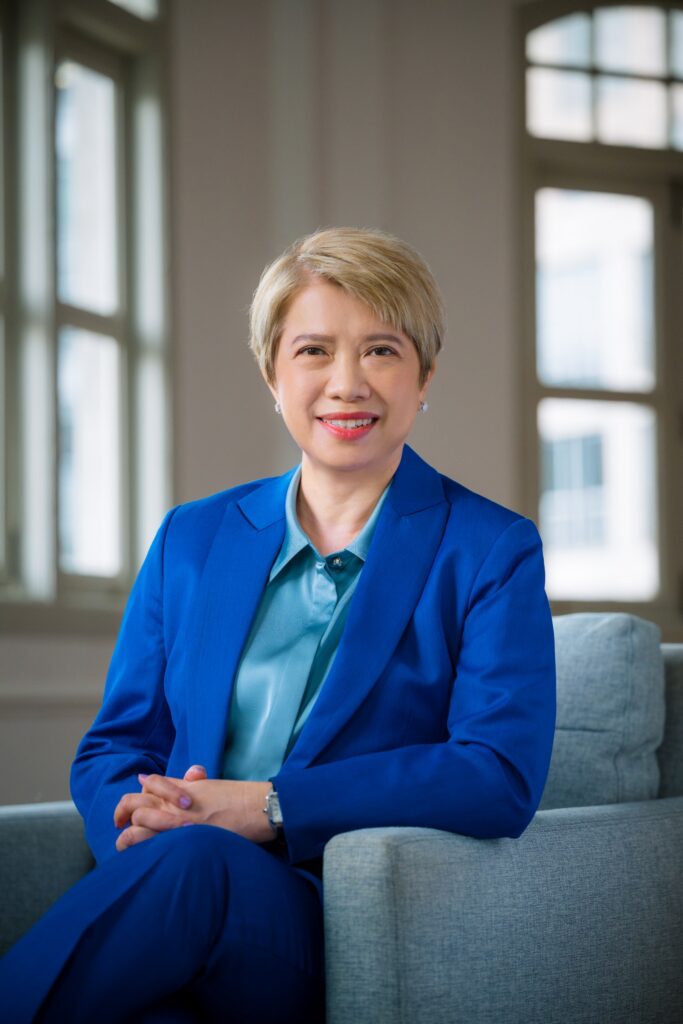
Carmen Wee is the Founder and CEO of Carmen Wee & Associates, an HR advisory services firm.
An accomplished Global CHRO with over 25 years of international business experience, Carmen has driven large-scale business transformation and change management within fast-growing organisations undergoing complex mergers and acquisitions.
She has led large, multicultural teams globally, coached senior business leaders, built high-performing organisations, and influenced stakeholders across diverse business ecosystems.
She is the author of two books:
- From The Kampung To The Boardroom: My Leadership Journey
- Board Vibes, Lessons From My Journey (published February 2025)
An experienced Board Member spanning commercial organisations, government, academia and public institutions across Singapore, the United States and the United Kingdom, Carmen has served as Compensation Committee Chair and as a member of Audit & Risk, Finance and People Committees.
Over the past decade, she has contributed significantly to transforming the HR ecosystem and building professional capabilities. In recognition of her contributions, she was conferred the Pioneer IHRP Master Professional status by Singapore’s Ministry of Manpower.
Carmen holds degrees from the National University of Singapore and Regent University (US) and is a Senior Accredited Director with the Singapore Institute of Directors.
At Frazer Jones, we partner with executives and HR leaders across the globe, helping organisations navigate an increasingly complex people landscape. Earlier this month, Sean Tong, Head of Asia Pacific, spoke with Carmen Wee to discuss why HR leaders make exceptional Non-Executive Directors.
From CHRO to the boardroom
Sean: What first sparked your interest in serving on boards?
Carmen: 12 years ago, I was chatting with my ex-boss on our post- retirement plans, and he broached the topic of exploring serving on boards. At that time, I had an intention not to work in a full -time corporate role forever as it was not sustainable to work such long hours, with the constant travelling and immense pressures.
Sean: At what point did you recognise that CHRO experience translates strongly into governance?
Carmen: HR has always had a strong governance role at the executive level by ensuring that our organizations are well-run and complied with the manpower legislations. In addition, ensuring that we provided our employees with the best employer value proposition to grow their skills and careers have always been the key priorities.
Sean: How did your executive career prepare you for board responsibilities?
Carmen: After going through the Singapore Institute of Directors’ (SID) Listed Entity Directors’ program, I realized I could play a role in the people committees on Boards, given my professional experience. It was an extension of my professional persona, albeit with new areas like audit and enterprise governance.
My executive career had provided opportunities to interact and to present before Boards. So, I was familiar with the types of Board questions for my function and the cadence of Board meetings.
Why do HR leaders make exceptional Non-Executive Directors?
Sean: What unique perspectives do CHROs bring to boards today?
Carmen: Our expertise is in workforce dynamics and how it could determine the direction and its impact on the business. Talent risks are not reflected fairly in the balance sheet of a business. A CHRO Board member can determine, challenge and unpack the totality of this dimension at the Board level.
Sean: How do culture, leadership and talent risks show up differently at board level?
Carmen: Currently, in a lot of Boards, people matters can be rather superficial and based on subjective opinions. The need for data-driven people decisions at the Board level, with the same degree of rigour for financial discussions, is long overdue. Topics like culture, leadership and talent risks can be measurable leading indicators that predict the direction of the business. There is a need to move beyond ‚employee engagement‘ to discuss how culture, leadership, workforce capabilities and talent risks sync with business strategies to produce the outcomes in the short and long term.
Sean: Why do you believe boards increasingly need human capital expertise?
Carmen: Just as the CFO provides the financial forecast, the CHRO Board member knows how to challenge the executive team to provide a forward-thinking workforce forecast. Put and developed together, with the CFO’s financial view, provides a more accurate business forecast.
Key stakeholders are increasingly putting pressure on the CEOs to unlock and create more value by challenging the strategies and assumptions of the business. The know-how to unlock this value rests in a CHRO Board member who is very comfortable discussing and challenging the executive team to do precisely that using data and experience, borne out of an understanding the operating context.
Sean: In what ways can CHROs influence enterprise strategy beyond the HR function?
Carmen: The CHRO can influence the enterprise strategy by having knowledge and understanding of the business ecosystem. They can double-hat and hold a business role or demonstrate a deep understanding of the commercial drivers of the business.
Just as the CFO provides the financial forecast, the CHRO Board member knows how to challenge the executive team to provide a forward-thinking workforce forecast.
Transitioning from operator to governor
Sean: What surprised you most when you first stepped into a NED role?
Carmen: It was rather seamless and there was less concern with the ‚how‘ and more on the ‚why‘ and ‚what‘ on the agenda topics that needed the Board approval. Decisions could be made quickly and there was less stalemate typically found in executive conversations.
Sean: How does influence change when you no longer hold executive authority?
Carmen: The key stakeholders at the Board level comprise the Chair, CEO and fellow peers. The influence would be informal and very much a team-sport. Decisions are made based on consensus after some discussion. As we Directors are mostly remote and not involved in the day-to-day operations, the ability to influence the executive team is less ‘hierarchy driven’ and more a matter of sharing our perspectives. The ability to persuade, convince fellow peers Board members is a matter of skills in communication, negotiation and wisdom in presenting our views.
Sean: What mindset shifts are required moving from management to governance?
Carmen: The mindsets shift for the CHRO involve looking at Board issues with a different lens. From an operator to a strategic enterprise Board leader that looks across the entire business chain to impact outcomes, there are four dimensions.
- The fiduciary guardian: from an internal functional focus to acting as a guardian of the company, ensuring human capital enables long-term corporate strategy with unwavering commitment to all shareholders‘ best interests
- The „People Lens“ Strategist: apply a „people lens“ to critical business decisions, such as M&As, by identifying „soft“ risks like toxic culture or talent loss that could lead to „hard“ financial or reputational damage
- Commercial acumen: shift from managing costs to interpreting financial statements to understand how human capital risks affect P&L and market valuation.
- Governance politics: move beyond internal office politics to navigate high-stakes Governance Politics involving the CEO’s ego, peer-to-peer board dynamics, and shareholder activists
Barriers and misconceptions
Sean: Why do you think CHROs remain underrepresented on boards globally?
Carmen: There are a few reasons why CHROs remain under-represented.
Sometimes there are limited seats on the Board and priority is given to the auditor, lawyer or banker. Some Boards believe that HR doesn’t require a permanent representative and relegated to a ’need to know‘ basis by asking the CHRO to give an update from time to time. To them this would suffice in terms of understanding the ‘talent risks’.
Sean: What misconceptions still exist about HR leaders at governance level?
Carmen: Sometimes, most Boards don’t have a current view of the pool of Board CHROs who are able to move the business needle through their contemporary HR practice expertise to impact organizational performance. The misconception remains in some quarters that it is still a necessary backroom operational function. And that most CHROS do not make the cut since they don’t have real business experience.
Sean: What must CHROs do differently to position themselves for board opportunities?
Carmen: To position themselves for Board opportunities, CHROS could consider the following preparatory steps.
They could demonstrate the willingness to take on more functional /business responsibilities that can impact the business and step out of the comfort zone. If they could demonstrate the real business value of their alignment to the strategy, they would be in a better standing.
More importantly, they need to learn the language of business and step up in their business acumen skills. Once they can connect the dots of governance, financial and business issues with their Human Capital fluency, they would be able to contribute to ‘value creation’ in the organisations that they serve.
Building board readiness
Sean: What experiences should CHROs intentionally seek if they aspire to board roles?
Carmen: They could start with not-for-profit Board roles or HR Committee roles. And they could learn the language of data and AI as these would be non negotiable skills for future-ready Boards.
Sean: How important are financial acumen and exposure to board committees?
Carmen: Financial and business acumen are vital for one to serve on Boards, especially in public-listed or private commercial Boards. The fiduciary/governance responsibilities for the Board member are subject to the specific market regulations. Picking up such knowledge in their current jurisdiction would serve the purpose as they make the transition toward Board leadership.
Sean: What advice would you give to a first-time CHRO pursuing a NED appointment?
Carmen: For CHROs pursuing a NED appointment, I would encourage them to diversify their portfolio so that they are not just a functional leader but have the financial and governance skills to lead the entire enterprise. Giving examples of having led any organization -wide transformation to impact the business would be seen as a plus. Their ability to present an objective and independent view, as is the case, in their current CHRO persona, is an asset.
The future of boards and governance
Sean: How do you see boards evolving over the next decade?
Carmen: Over the next decade, the following are the trends in Board evolution:
a. From oversight to strategic foresight
The traditional „noses-in, fingers-out“ model is under serious pressure. The boardroom is no longer just intended to deliver oversight; it is becoming the hub of strategic foresight. Directors surveyed by NACD identified strategy execution (78%) and strategy development (71%) as the two most important areas for improvement, reflecting that strategy-making is now far more continuous, responding to more frequent disruptions and growth opportunities.
b. Composition will shift toward deep expertise
The generalist director is losing ground. More than two-thirds (67%) of NACD survey respondents indicate that their board is more likely to seek out an individual with specific expertise than someone with general business leadership experience when filling the next board seat. The share of active or retired CEOs joining S&P 500 boards has dropped 5% over the past decade, as the view grows that broad leadership instincts are less universally applicable in a world where value creation is deeply tied to technology, data, and shifting value chains.
c. AI governance will become a core board responsibility
Quickly evolving global regulations and AI technologies have challenged companies to ramp up, and implementing a robust ethical framework from the beginning of an AI strategy will keep ethical standards at the forefront, no matter what regulatory changes lie ahead. Boards will need to move from asking management about AI to actively governing AI risk, bias, and oversight frameworks, with directors expected to hold genuine AI literacy, not just awareness.
d. Human capital will graduate to a board-level risk category
The intersection between new business models and competition for talent is striking, as businesses disrupt their own economic models and operations, the types of skills they seek are shifting fundamentally. Directors will need to ensure their organizations are effectively upskilling workforces while simultaneously competing in a targeted war for talent in digital and data skills. The boards that get ahead of this will treat human capital not as an HR function but as a strategic risk requiring governance-level accountability.
e. CEO succession will demand far more board time
Across the globe, boards are spending more time on proactive executive development and holistic CEO succession planning. Companies grappling with internal and external pressures on CEO tenure are recognizing that starting succession planning early reduces risk and increases the odds of smooth, value-supportive CEO transitions. Yet just under 50% of directors indicate they are very confident in their board’s ability to effectively identify candidates for CEO succession, a striking gap given the stakes.
f. Board refreshment will accelerate, and become contentious
According to PwC’s 2025 Annual Corporate Directors Survey, 55% of directors believe at least one board colleague should be replaced, the highest proportion recorded in the survey’s history. This will push boards toward more rigorous, honest self-evaluation processes, with shareholders increasingly scrutinising not just board composition but whether evaluation practices are driving change.
g. Demographic and workforce shifts will force the agenda
By 2030, 58% of the global workforce will be Millennials or younger. As a result, talent, risk, and culture have dominated the board agenda and board and C-suite succession may itself become challenging as experienced directors near retirement without qualified younger talent in the pipeline.
h. The political and regulatory environment will diverge
Boards are increasingly tasked with helping companies navigate politically charged or polarising issues, such as DEI and ESG. The decade ahead will see boards in different markets facing genuinely divergent regulatory requirements, making the job of global boards far more complex. A single governance posture will not hold across all jurisdictions.
Will human capital become a core board agenda topic?
Carmen: The next generation of NEDs will need to possess the following capabilities to be relevant to manage the ever-increasing complex operating environment:-
a. Digital and AI literacy, not just awareness
NEDs will be expected to go beyond asking management to explain AI. They need to understand algorithmic risk, data governance, AI ethics, and the difference between hype and genuine enterprise risk. Implementing a robust ethical framework from the beginning of an AI strategy will keep ethical standards at the forefront, no matter what regulatory changes lie ahead. The NED who cannot interrogate an AI strategy with informed questions will be a liability on any board subcommittee dealing with technology or audit.
b. Human capital as a strategic risk domain
Talent management is predicted to become a more prominent skill area by 2030, driven by demographic changes across developed economies — with 58% of respondents identifying it as rising in importance, alongside motivation and self-awareness (47%) and empathy and active listening (46%). For the next-generation NED, this means being able to challenge management on workforce capability, succession depth, culture metrics, and skills obsolescence, not just headcount and staff turnover. Boards currently lack the governance vocabulary and oversight frameworks to hold management accountable on human capital.
c. Analytical rigour with data fluency
Future leaders will need to combine analytical rigour with creative problem-solving. By 2030, employers will expect leaders to possess both deep and broad expertise, adopt entrepreneurial thinking, and apply cultural intelligence to ambiguous global challenges. For NEDs specifically, this means being able to read a workforce analytics dashboard, interrogate ESG metrics, and identify when the data management is presenting tells an incomplete story.
d. Systems thinking and scenario planning
Many organisations are moving away from traditional long-term planning to a continuous approach to strategic planning, involving frequently exploring and pressure-testing different strategic options across a range of time horizons. The next-generation NED must be comfortable with genuine ambiguity, able to stress-test strategic assumptions rather than simply validate management’s preferred view.
e. Cyber and technology risk governance
With escalating cyber threats, boards must now act as cyber guardians, approving and funding robust cyber risk frameworks. Cybersecurity governance training helps boards stay prepared, not reactive. NEDs who sit on audit or risk committees particularly will need substantive, not performative, fluency here.
f. Geopolitical and regulatory intelligence
2024 was a significant year for elections across the globe, and voters in many jurisdictions voted for „change“ candidates, meaningfully increasing the level of political and economic uncertainty, especially for businesses operating in multiple international markets. Next-generation NEDs will need to bring geopolitical literacy and regulatory foresight, understanding how diverging regulatory environments (EU, US, Asia) create asymmetric compliance obligations.
g. The human edge: constructive challenge and psychological safety
Despite all the technical demands, the irreducibly human capability remains central. Effective NEDs will practice active listening, know the right time to ask probing questions, and encourage deeper thinking, going beyond the provided materials to seek out information on competitors and new regulations, as well as meeting internal constituents to deepen their understanding of the business. And crucially: effective NEDs won’t be afraid to ask difficult questions outside their expertise, framing them constructively to encourage discussion and deeper analysis, rather than to criticise.
h. Lifelong learning as a non-negotiable
NEDs will only be successful when they realise they have never truly arrived, they are required to continually invest in their development in the role. The next-generation NED will need to treat continuous professional development not as an add-on but as a core part of how they maintain their licence to challenge.
How Frazer Jones can help you secure your new Non-Executive Director position
Frazer Jones supports senior HR leaders in securing Non-Executive Director positions by combining deep market insight with an extensive network of board‑level contacts. Our specialist consultants work closely with you to refine your board profile, articulate your value proposition, and position your experience in line with what organisations and chairs are seeking. From identifying and accessing exclusive opportunities to advising on governance expectations, interview preparation, and personal branding, Frazer Jones provides tailored guidance throughout the process, helping you stand out and confidently take the next step into a successful NED role.
Please contact me if you would like to know more.
Author